How to Choose a Wind-Resistant Umbrella for Coastal Weather

Coastal weather doesn't rain down on you. It arrives sideways, in gusts that funnel along promenades and swirl around the corners of seafront buildings, carrying salt spray and grit with it. An umbrella that behaves perfectly on a calm residential street can flip inside out before you've crossed the road. Buying well here isn't about finding the heaviest model on the rack; it's about understanding how a canopy sheds wind, how a frame absorbs it, and how a few maintenance habits keep both alive in salty air.
Start With How You'll Actually Use It
Before comparing specs, picture your typical outing. A two-minute dash from a car park to a café door puts very different demands on an umbrella than a forty-minute walk to the station with a dog on a lead and a bag of shopping. Short dashes favour light, compact umbrellas that open fast and don't fight you. Long walks in exposed places favour something larger, deeper-domed and heavier, because you'll be holding it against continuous pressure rather than a single gust.
Wind direction matters too. On an open seafront, gusts often hit from the side as much as the front, so a canopy that stays taut and symmetrical will handle a changing angle better than one with a long, flat leading edge. If you walk the same route daily, watch where the wind funnels — between two buildings, along a sea wall, at the mouth of a pier — and judge the umbrella by the worst thirty seconds of that route, not the average.
Canopy Shape: Why a Dome Beats a Dinner Plate
A flat canopy behaves like a sail. Wind gets underneath, finds no route out, and lifts the whole thing. A deeper dome forces air up and over the curve, which is why the shape matters more than the fabric or the brand name on the strap.
Look for a canopy that arches noticeably rather than spreading out flat, with edges that curve down toward the ribs. Sharp, square corners catch wind; scalloped or rounded edges let it slip past. Diameter is a trade-off: roughly 100 to 120 centimetres covers one person well, but every extra centimetre adds sail area. A generous canopy in a strong gust is harder to hold than a modest one, so resist the urge to buy the biggest model you can find.
Fabric tension matters almost as much as shape. Press the canopy gently from underneath: it should feel taut, with no loose pouches between the ribs. Slack fabric flaps, and flapping is what shreds seams over a season or two.
Common canopy shapes and how they behave
- Deep dome: best wind behaviour, slightly less coverage at the shoulders.
- Shallow dome: a decent middle ground for everyday town use.
- Flat canopy: comfortable in still air, the first to invert in a gust.
- Square or rectangular: good coverage, but the corners act as catch points.
- Asymmetric with a longer back: useful if you carry a backpack, since it shields the bag rather than your face.
Venting: The Single Most Useful Feature
A vent is a gap or second layer near the top of the canopy that lets air pass through instead of collecting underneath. It's the difference between an umbrella that resists a gust and one that surrenders to it. When wind enters the underside of a vented canopy, part of it escapes through the gap, so the lifting force drops.
Single-vent umbrellas have one opening, usually covered by an overlapping flap. Double-vent designs add a second layer or a mesh panel, which releases more air but adds weight and, in a heavy downpour, can let a little water through. For a genuinely exposed coastal walk, a double vent is usually worth the extra grams. For occasional showers, a single vent is plenty.
Be realistic about what a vent can do. It buys you time and reduces the violence of the flip; it doesn't make an umbrella immune to a gust that would knock you sideways. If the wind has turned your umbrella inside out twice in one walk, the honest answer is that no canopy shape will save you.
Frame Strength: Where Cheap Umbrellas Fail
The frame decides whether your umbrella survives the gust that bends it. Materials behave very differently near the sea.
- Fiberglass ribs: flex under pressure and spring back. The best choice for wind, though slightly heavier than aluminium.
- Aluminium: light and rust-resistant, but bends permanently once pushed too far.
- Steel: strong and stiff, and the fastest to corrode in salt air unless it's well coated.
- Mixed frames: fiberglass ribs on an aluminium or fiberglass shaft. Usually the sweet spot for coastal use.
Rib count matters too. Eight ribs is the sensible minimum; ten to sixteen spreads the load across more points and reduces the stress on any single joint. Look for reinforcement where the ribs meet the stretchers, and metal rather than bare plastic at the tips and joints — plastic becomes brittle with UV exposure and cold.
Some umbrellas are built to invert deliberately and pop back into shape. That's a reasonable design for coastal wind, but only if the joints are strong enough to survive the trick repeatedly. Flex the frame gently in the shop; it should give without creaking, and nothing should feel loose at the hub.
Small details that decide lifespan
Check the fabric: a tightly woven polyester or pongee with a water-repellent finish sheds rain and dries quickly, and a ripstop weave resists tearing if a rib does break through. Double-stitched seams last longer than single. For the handle, choose something rubberised that stays grippy with wet hands, and consider whether you want an auto-open mechanism at all — it's convenient, but it adds moving parts that salt air will eventually find.
Salt-Air Care: Small Habits, Longer Life
Salt doesn't just sit on the surface. It attracts moisture, and moisture plus metal means rust, seized joints and a runner that refuses to slide. The fix is unglamorous and quick.
- Rinse the canopy and frame with fresh water every few weeks, and after any walk where you can taste salt in the air.
- Open the umbrella fully and let it dry completely before folding. Folding it damp is what causes mildew on the fabric and corrosion in the frame.
- Wipe the shaft and runner dry, then apply a dry silicone spray to the moving parts. Avoid oily lubricants, which collect sand and grit.
- Keep it out of a sandy car boot. Grit abrades the canopy and jams the runner faster than wind ever will.
- Wash marks with mild soap and a soft cloth, never a stiff brush, and never leave it sitting in direct sun for days on end — UV degrades both fabric and plastic fittings.
- Store it open if you have the space, or loosely closed in a dry cupboard rather than compressed at the bottom of a bag.
A Two-Minute Test Before You Buy
Open the umbrella in the shop and run through this. Press the canopy from underneath and feel for tautness. Flex a rib gently to check it springs back. Run your thumb along the seams and the rib tips for loose stitching and sharp edges. Slide the runner up and down a few times; it should move smoothly with no grinding. Grip the handle with a wet hand if you can. Then check the weight against your walk: if your arm aches after ten minutes of holding it up, it's the wrong umbrella for you, however well it's built.
Buy for the wind you actually get, not the storm you imagine. A well-vented dome with fiberglass ribs, a sensible diameter and a rinse of fresh water now and then will outlast three flimsier umbrellas left to corrode in a hallway cupboard.
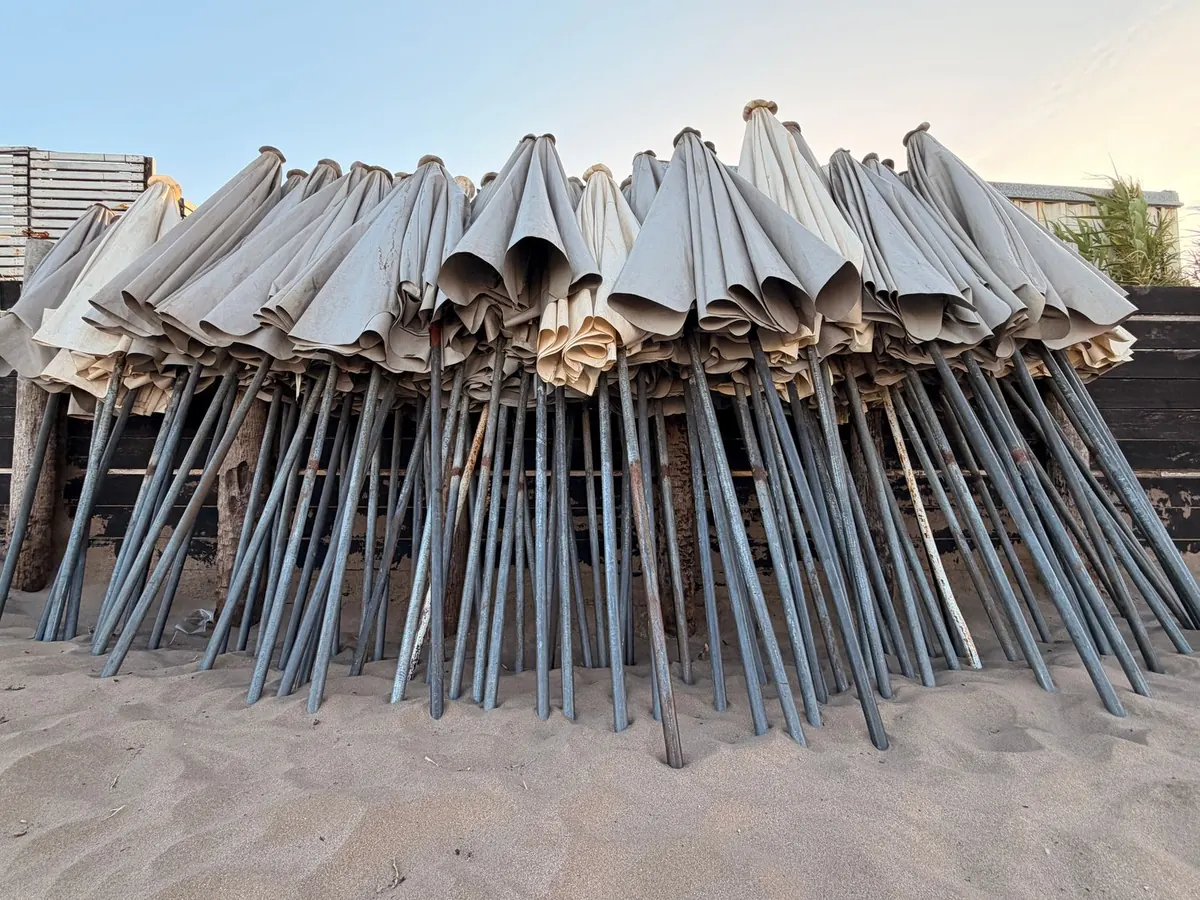
Photo: Demiahl / Pixabay