Rainy-Day Dog Walking Gear Checklist: Umbrellas, Raincoats, and Towels
The forecast says rain. Your dog says walk. Both of you are right, and the only real question is what you're carrying when you head out the door. Wet-weather walks tend to go wrong in the same few ways: a jacket soaked through at the shoulders, a leash tangled around an umbrella shaft, a dripping dog on the sofa ten minutes later. None of it is hard to fix. It just helps to have the gear gathered in one place before the first drop lands.
Sort Out Your Hands First
Two hands, one leash, one bag of waste, sometimes a phone. Rain does not respect that math. Before you shop for anything else, decide how you'll hold a canopy while both arms are already working.
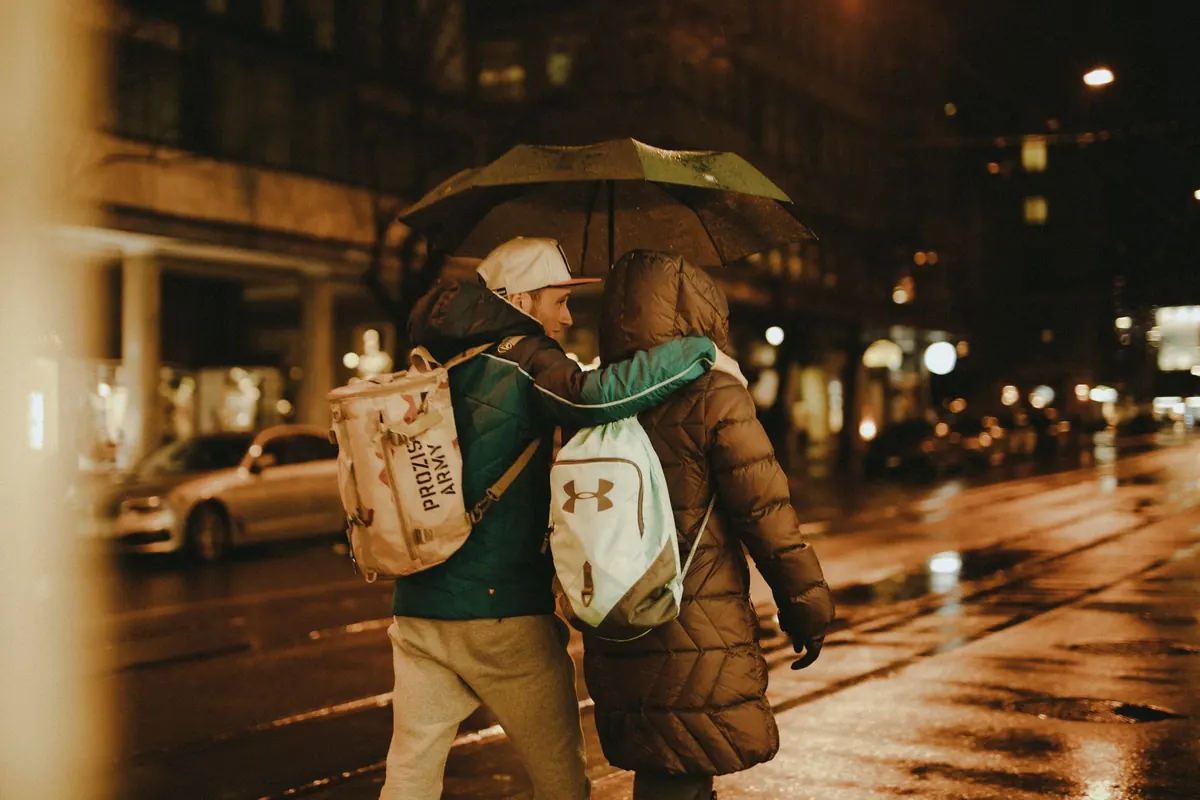
If your dog pulls, or you walk with a long line, a standard full-size umbrella will fight you all the way around the block. A belt-mounted or backpack-strap umbrella holder keeps the canopy overhead and your hands free, which is the version most people end up preferring once they've tried it. If you'd rather keep a classic brolly in hand, hold the leash and the umbrella handle in the same grip, loop the wrist strap, and practice once in the garden before you commit to a busy street.
Whatever you choose, load the leash before you open the umbrella. Doing it in the other order is how handles get dropped.
Choose an Umbrella That Survives the Wind
Rain alone is easy. Rain plus a gust is where cheap umbrellas fail, usually by folding backwards on the one block where you can't stop.
- Vented or double canopy. The gap lets wind pass through instead of turning the umbrella into a sail.
- Flexible ribs. Fiberglass or resin ribs bend and spring back. Thin metal ones crease once and never sit right again.
- A deeper dome. Shallow canopies dump water onto your shoulders and down your back.
- A real grip. Foam or rubber, with a wrist loop you'll actually use. A wet plastic handle is slick.
- Auto open and close. One-handed operation matters more than it sounds when the other hand is on a leash.
A compact umbrella is fine for quick block walks. For anything longer, a full-length stick umbrella covers your shoulders and the top of your dog's back, and it takes gusts better. Shake it out on the porch before you go inside, and don't leave it folded wet in the car for a week.
Raincoats: Yours, Then Your Dog's
For you
Look for a hood with a stiff brim, or wear a cap underneath it, so rain isn't running down your face. Pit zips keep you from steaming on a brisk walk. A jacket that hangs past your hips means you can crouch to bag up without a cold stripe down your back. And check the cuffs: velcro or elastic beats an open sleeve every time.
For your dog
Fit matters more than fabric. Measure along the back from the base of the neck to the base of the tail, then around the widest part of the chest. A coat that slides sideways mid-walk is worse than no coat, because it rubs and your dog will spend the whole walk trying to shrug it off.
Look for a belly band or leg straps to hold it steady, and reflective piping if your walks happen near traffic in low light. Short-haired, older, or very small dogs get the most from a shell. Dogs with thick double coats usually only need a light one to keep the worst of the mud off. If your dog has a skin condition, is recovering from surgery, or takes medication that affects how they handle cold, ask your vet before you layer anything over a sensitive area.
Towels and the Entryway Setup
Towels do more work than the umbrella. Keep two: one for the body, one for the paws. Microfiber wrings out easily and dries fast between walks; a chamois-style cloth is excellent for legs and feet.
Dry the dog before you dry the floor. Doing it in that order is the whole trick.
Set up the landing zone before you need it: an absorbent mat just inside the door, a hook for the wet coat, a small basket for damp towels, and a treat jar within reach.
- Close the door and keep your dog on the mat while you take off your own coat.
- Towel the back and chest first, working with the coat rather than against it.
- Move to the legs. One paw at a time, one firm pass each.
- Lift each paw and check between the toes for grit, small stones, and road salt, which can irritate pads. Wipe it off rather than letting your dog lick it away.
- Hang the towel to dry and drop it in the wash at the end of the week.
The Small Kit That Saves a Walk
None of these are expensive, and all of them are annoying to be without:
- A roll of bags, plus two spares in a coat pocket that never gets emptied.
- A compact hand towel in a zip pocket for muddy paws and wet phone screens.
- A headlamp or a clip-on light for dark mornings and early evenings.
- A neoprene or silicone grip cover for the umbrella handle.
- A waterproof pouch for keys, phone, and cards.
- A carabiner, so you can hang a dripping umbrella off your belt while you clean up after your dog.
- A spare towel in the car if you drive to your walking spot.
When to Turn Around
Not every wet walk is worth finishing. Thunder and lightning are a straightforward no, especially for anxious dogs. Flooded paths, fast-moving water, and slick wooden boardwalks or metal grates are worth avoiding entirely. Heavy rain after a warm afternoon turns humid fast, and a dog in a raincoat can overheat on a longer route.
Visibility is the other thing. A dark coat plus a dark umbrella plus a wet road is a poor combination. Stick to lit streets, wear something reflective, and keep the walk shorter than usual. If your dog is older or manages joint trouble, a shorter loop on pavement beats a slippery trail. When you're unsure how much exercise is right for a dog with a health condition, that's a question for your vet, not the weather app.
Keep the Kit Loaded by the Door
Assemble it once: umbrella, coat, two towels, bags, light, treats, all in one crate or basket near the door. Restock it when you come back in, not when you're already late leaving. The difference between a miserable wet walk and an ordinary one is rarely the weather. It's whether the towel was where you left it.
Photo: furry_portraits / Pixabay